Navigation
Public engagement

Becoming a Scientist

Read online for free

Print your own copy

Virus Fighter

Build a virus or fight a pandemic!

Play online

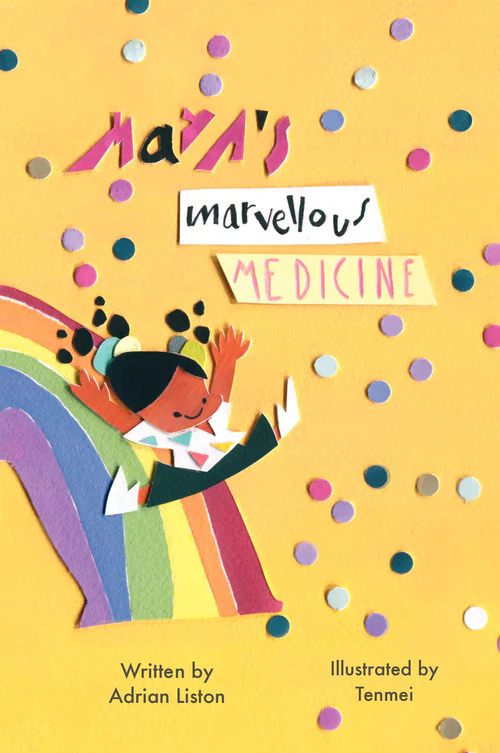
Maya's Marvellous Medicine

Read online for free

Print your own copy

Battle Robots of the Blood

Read online for free

Print your own copy

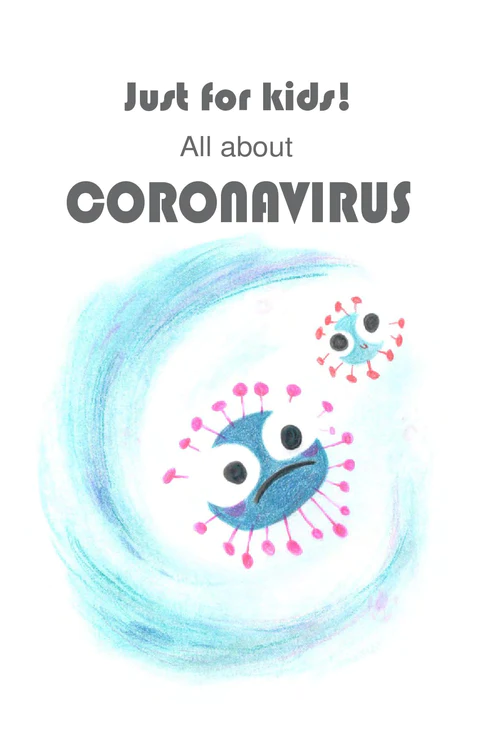
Just for Kids! All about Coronavirus

Read online for free

Print your own copy

Archive

Entries in science careers (102)

Thursday
Jan292026

Self-Doubt: An Anthology of Experiences in the Biomedical Sciences

Introducing our new book, "Self-Doubt: An Anthology of Experiences in the Biomedical Sciences". 

Have you ever had a crisis of self-doubt? A feeling that you are out of your depth and are not cut out for a career in science? I have. At the time I thought it was just me.

After decades of mentoring PhD students and postdocs, I now believe self-doubt is near-ubiquitous, an occupational hazard in science. The hardest part of dealing with your self-doubt believe you are alone in your thoughts. So my lab members and alumni have shared their own stories of career self-doubt.

If you know anyone in science who is doubting their path, please share this book with them (Amazon, Great British Bookshop) so that they know they are not alone

Friday
Jan162026

Where are they now?

I was reminiscing about the amazing people who have passed through our lab over the years. We have a constant stream of new team members and people finishing up. So what happens after you leave an academic lab? Here are our outcomes:

12 technicians:

  • 40% moved to higher education (MPhil/PhD)
  • 60% moved to another academic laboratory job 

30 Masters students:

  • 43% started a PhD
  • 7% started another higher education degree
  • 23% technician positions in academia
  • 20% moved to biotech/pharma
  • 7% moved to agtech

22 PhD students:

  • 30% became post-docs
  • 8% went to other positions in academia
  • 40% to biotech/pharma
  • 13% to clinical posts
  • 4% to law

27 post-docs:

  • 27% to tenure-track / tenured positions
  • 27% to another post-doc position
  • 42% to biotech/pharma

All of them now successful!

Thursday
Jun192025

ALBA-IBRO Diversity podcast

The ALBA Network has a great program on enhancing diversity in neurosciences, including some fascinating podcasts hosted by The Lonely Pipette. I was honoured to be able to take part in the latest episode, together with Denise Fitzgerald, Dorieke Grijseels and Angeline Dukes.

Take a listen for a great discussion on how an inclusive working environment is the true fuel of a productive research team. We talk team dynamics, lab values, and inclusive leadership, as well as practice advise on how and when to incorporate positive research culture practices into your science!
Thursday
Jun192025

Mothers in Science

My interview with Mothers in Science is now out!
Thursday
May152025

PRIDE: Challenges, Champions and Change

Thursday
Feb062025

Diversity in Science, KU Leuven

It was my pleasure to be at the "Diversity in Science" symposium today at KU Leuven! If you weren't able to attend, you missed a lot of great talks and round-table discussions, but here is a chance to see my own contribution to the event:
Monday
Nov182024

Positive research culture at the Immunology STEM Village

Today I'm honoured to give a talk on building a positive research culture for the Immunology STEM Village meeting in Manchester. If you can't make it, but are interested in the topic, here is my talk:
Sunday
Oct202024

Being a scientist

From an interview with Superbugs 


I didn’t really know what a scientist was growing up in Australia. My Dad was a truck driver, and everyone around me either drove trucks or worked in factories. If it wasn’t for watching nature documentaries on the TV, I probably would have dropped out of high school and become a truck driver too. Listening to David Attenborough explain how life was interconnected changed my pathway in life. I had a taste of wondering “why” and hearing it explained, and I wanted to know how the how world worked.

I got good grades in school and went to university. Although, to be honest, you didn’t need especially good grades to get into a science degree – it is rather inclusive entry, unlike medicine or engineering which are tougher to get into. I’m also not especially convinced that the grades you get during your degree in science reflect much about your capacity to be a scientist. The undergraduate degree has to give you the baseline of facts and tools, but once you graduate and become a scientist you are operating at the very boundary of human knowledge. It doesn’t matter if you are quick or slow, have a photographic memory or need to look up basic formulas each time. Science is different from any other walk in life. You can fail and fail and fail, but by succeeding just once you add something new to the sum total of humanity’s knowledge. When I think about what it takes to succeed as a scientist I think it really comes down to three things: creativity, resilience and integrity.

Why creativity, resilience and integrity? Creativity because we don’t know what the right experiments are. Once you are at the boundaries of knowledge, all you can do is take an educated guess, design the best experiment you can, and see if it sheds new light. Most of the time it doesn’t! So a creative scientist is someone who is good at coming up with multiple different ways to attack a problem. Of course, this means a lot of failure, which is where resilience comes in. Failing multiple times is a serious downer. Classical high achievers often struggle when they transition from acing every exam to failing in the lab. If you’ve got grit, if you know how to pick yourself up and try again, then you’ll eventually solve the problem. That is what science is, being wrong over and over again, until in the end you are right. Finally, integrity is key. You’ve just got to be honest in science. To make progress we need to build a tower out of data. People who are willing to fudge their results, fool themselves into thinking they are right when they are not, they start building their tower on poor foundations. The scientists who are willing to admit they are wrong, change their mind with new data, and take the slow route are the ones who end up building the highest.

I guess this doesn’t make science sound super attractive as a career! It is genuinely hard, and few people actually enjoy being wrong over and over again! But the thing is, when you are right, it is amazing. When we find something out it is actually something entire new that we have created – we have moved the sphere of human knowledge further out. There are also a lot of perks to a career in science – I get to travel a lot, don’t need to wear a suit, and the work is easier and for more money than driving a truck or working in a factory!

For myself, after a research career in Australia and America, I started to become more interested in creating a space for scientists to excel in, rather than doing science myself. I moved to Belgium and set up a lab in a hospital there. I tried to bring in a team of amazing people with different skills and backgrounds – biologists, mathematicians, clinicians, engineers, chemists and more, precisely because we never really know the best way to tackle the new problem. My job is to pick the questions we work on, and help the team to find ways to put together their skills to answer those questions. By having a team of diverse people who think in different ways we became much more successful at finding a winning formula. We have uncovered the causes of human diseases, solved riddles for why some patients are sick, started clinical trials that brought new treatments to neglected patients, even developed new drugs. Each success we have opens up a new and more interesting problem, and we are genuinely improving the world.

After a decade in Belgium I moved over my lab to Cambridge. We are still working on interesting problems in pathology, and I still have an amazing team of diverse scientists. Perhaps the best part, though, is that so many people have left my lab and have started up their own teams, in universities, hospitals and biotech companies, all across the world. That decision I made to go into science after high school has led to hundreds of scientists being trained, and humanity will build on the knowledge they create long after I am gone.

Monday
Sep302024

Meet the nextGEN: James Dooley

An interview with LifeScience.org

Who or what called you to lead?

My journey into leadership started with a deep-rooted desire to care for others, a calling that was shaped by my childhood experiences. Growing up in foster care, I spent a lot of time with my grandmother, who was a kind and caring person. She didn't just take care of me—she took care of everyone around her. Watching her selflessness made me realise early on that I wanted to follow in her footsteps and help people.

At 15, I ran away from home and started working in healthcare. My first jobs were in hospitals and nursing homes, and by my early 20s, I decided to go back to school to become either a paramedic or physician. However, my path took a major turn after I was in a serious car accident, which left me in rehab for two years. The physical toll it took on me made me question whether I could handle the intensity of working in the ER, something my mentor—who had become a close friend—strongly advised me to reconsider.

After another accident in the ER, I realized that my body simply couldn’t endure the demands of the job. So, I shifted my focus to research, with the help of that same mentor who pointed me towards a biotech research program. I was working in immunology at the time, but it wasn’t long before neurology caught my attention. Years later, I crossed into that field after meeting my co-founder, Adrian Liston, when he set up his lab in Belgium.

Adrian’s brother tragically passed away from a traumatic brain injury (TBI), which deeply impacted both of us. That loss shifted our focus toward the huge unmet need for TBI treatments. We started applying the immunological research I had been working on toward neurological solutions, and what we discovered was promising. In transgenic animals, we were able to get effective immune responses in the brain. From there, we realised that with gene therapy, we might be able to translate these findings to humans and potentially save the lives of TBI patients in those critical early stages.

When Adrian moved the lab to the UK, we founded our company and have been dedicated ever since to making this a reality. As a leader, I’m driven by the desire to fill the gaps in healthcare, especially for conditions like TBI, where treatments are sorely lacking. My goal is to translate cutting-edge research into therapies that make a real difference for patients and their families.

Sunday
Sep292024

Graphic novel shows unconventional routes into science

Stories of people's unconventional routes to becoming scientists are told in a new graphic novel intended to encourage others into the field.

The book - Becoming a Scientist - is aimed at young adult readers and was written by the University of Cambridge's Prof Adrian Liston, and illustrated by Yulia Lapko - a business administrator for the pathology department.

Both their routes could be deemed unconventional as Prof Liston was expected to join his truck-driving family's business in Australia, while Ms Lapko fled her native Ukraine in 2022 following invasion.

Prof Liston said as a youngster he did not even know what a scientist was, and hoped the stories showed the "many different pathways".

The novel told the stories of 12 members of the Liston-Dooley lab, who researched the immune system and tissues during pathology.

This was not Prof Liston's first book and he has written books for young children including All about Coronavirus, Battle Robots of the Blood and Maya’s Marvellous Medicine.

His graphic novel, however, was aimed at older readers between 12 and 18 years of age.

Stories about how the team members came to work in science are told in the graphic novel

"It was really luck more than anything else that allowed me to fall into the career I have today," Prof Liston said.

"When I looked around the amazing people in my lab, I realised that everyone had a story about overcoming barriers to enter science."

Women in a lab

Magda Ali, Ntombizodwa Makuyana and Amy Dashwood became models for the cover of the book

Prof Liston freely admits he was not brought up to be a scientist.

In the book, he said: "I grew up in a truck-driving family in Australia.

"My parents didn't get the chance to finish high school and the only jobs I heard about were driving trucks or working the factory line building cars."

He added: "I never met a scientist. Actually, if I hadn't been inspired by the weekly nature documentary on TV I'd never have known being a scientist was possible."

Adrian Liston was inspired to follow a scientific education after watching nature programmes on television

Studying at university was "an epiphany for me", the professor said.

"Sure, there was class snobbery, but I was also able to find my group who were weird like me."

He told the BBC: "I want to see more kids with grit and creativity really look seriously at science as a potential career, and I realised that my team here at Cambridge really demonstrated just how diverse scientists are in practice.

"Every one had their own story of adversity conquered, their own role-models and their own motivations, so I thought we could simply tell their stories.

"While each one is unique, together they do show that science can be for anybody, and science becomes richer for having a diversity of talents."

Image of woman from science book

Magda Ali pursued her education because she dreamt of becoming a scientist

Other stories included those of Magda Ali, who is completing her PhD at Cambridge University. Her parents came to the UK as refugees from Somalia and although she attended a school where few students even took A-levels, she continued her studies and her dream of becoming a scientist.

Visiting student researcher Alvaro Hernandez said he failed his school entrance tests in Peru at the age of five and almost did not get an education at all, having been preoccupied instead with football.

"I think my early teachers would be surprised to see me in Cambridge," he said in the book.

Their diverse stories have been illustrated by Yulia Lapko, who came to the UK under the Homes for Ukraine scheme.

Yulia Lapko in an office

Yulia Lapko came to the UK after her native Ukraine was invaded by Russia

She had been working as an artist before the war, but on arriving in Cambridge, and added: "I took a break from that because, settling in the new country, it made sense to get a full-time job for a sense of security and stability. Now that I feel settled enough I can expand the possibilities of what I can do with my skills.

"I really enjoy being here, I love the department and its people.

"Drawing people is my main speciality in art, and all the people featured in the book I actually see every day, which made it easier to capture them in a way that feels alive and effortless.

"But it’s one thing to see what people look like and the other is to really see them, to know the story behind each individual, so having all of them share their backgrounds, hopes and wishes really helped to get the whole picture of each character."

Prof Liston added: "It is guts and heart rather than brains that lead to scientific breakthroughs, and every discovery worth making happens from a team."


Read the book for free online or order a print copy.