Navigation
Career development

See our career development resources!

Self-doubt in science

Public engagement

The Professor, the Pipette

& the Path Not Taken

Print your own copy

Digital on Kindle

Becoming a Scientist

Read online for free

Print your own copy

Virus Fighter

Build a virus or fight a pandemic!

Play online

Cell Mates: The ABC of immunology

Print your own copy

Buy the merch!


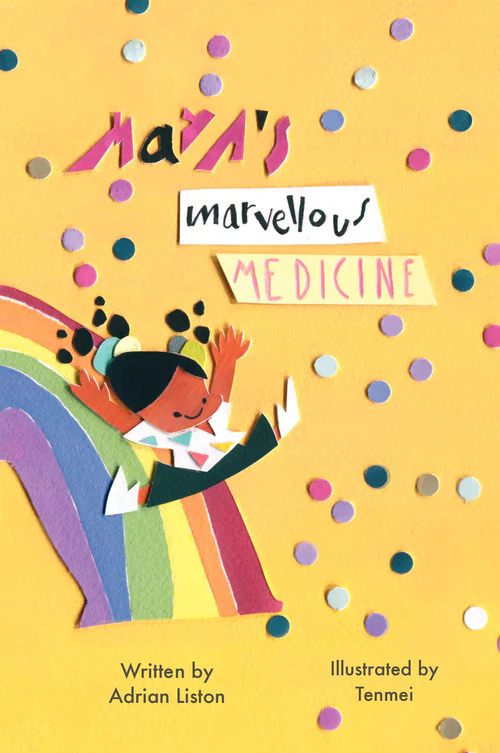
Maya's Marvellous Medicine

Read online for free

Print your own copy

Battle Robots of the Blood

Read online for free

Print your own copy

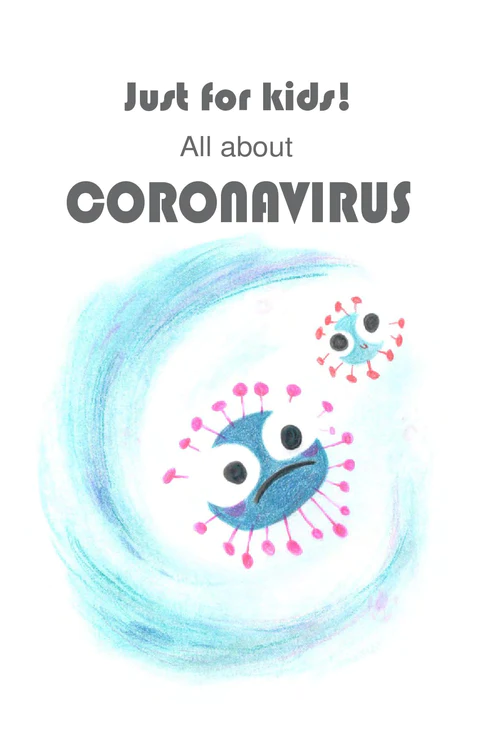
Just for Kids! All about Coronavirus

Read online for free

Print your own copy

Archive
Aila Biotech

Learn about our spin-off, Aila Biotech!

Sunday
Sep132026

Cell Mates: The ABC of immunology

New book alert! And this is a cute one!

This is not your ordinary ABC book.

A is for Antibody. B is for Bursa. X is for Xenograft. And Z? Z is for ZAP-70.

Cell Mates: The ABCs of Immunology takes the familiar alphabet-book format and fills it with immune cells, signalling molecules, scientific wordplay, and a colourful cast of characters working inside the body.

Created especially for scientists and science-loving adults to share with the children in their lives, Cell Mates works on two levels. Younger readers can enjoy the expressive illustrations, memorable characters, and playful alliteration, while grown-ups can introduce the fascinating immunology hidden within every page.

Meet a macrophage instead of another monkey, discover a neutrophil rather than a nest, and find out why even the most intimidating scientific words can be fun to say.

An illustrated glossary includes pronunciation guides and accessible explanations of what every Cell Mate does, helping curious readers (and their grown-ups) continue exploring after the alphabet is finished.

Written by immunologist Adrian Liston, illustrated by JJ Fitzgibbon, and designed by Lydia Makaroff, this scientifically grounded read-aloud is an unusual gift for researchers, doctors, laboratory scientists, educators, and curious families.

Because the immune system never stops working, watching, and communicating - and learning about it should be just as lively.

The paperback is out now on Amazon, and the hardback and merch is available on Etsy at the A is for Antibody store!

Tuesday
Sep082026

‘Whether you go the hard or easy way, you can end up in the same place’

Immunologist Adrian Liston on his innovative and hilarious new book on bioscience careers

By Tom Ireland, 4 Sept 2026, in The Biologist


Adrian Liston is professor of pathology and head of the division of immunology at the University of Cambridge. He is also part of a team at the university that has produced a series of ‘becoming a scientist’ outreach resources. 

His new book, The Professor, The Pipette, and the Path Not Taken: Choose your Science Career, co-written with his colleague Professor James Dooley, takes the form of a choose-your-own-adventure book, where readers make choices that change the path they take through the book. 

Readers may find themselves working in cutting-edge research, developing spin-out companies, becoming a professor or leaving science altogether. The hundreds of paths through the book lead to a range of alternative endings. (Not all of them happy: one sees you dying in a DIY biohacking experiment, while another reads simply: “You become an accountant. The end.”)

Liston spoke to The Biologist about why he chose to write such a book. 

In my pastoral role at St Catherine’s College in Cambridge I have hundreds of conversations with PhD students and postdocs about their anxieties, hopes and fears. What I really notice is that the level of anxiety is disproportionate to the actual outcomes I see. I see all of these anxious students and then I see how successful they become later on – often incredibly successful in different ways from what they and I expected.

My mission is to highlight that going into science, especially biomedical science, is going to be a good career option. There’s going to be twists and turns. Jobs will change. Science is always changing. But it’s a good career move for people who want to have mobility. 

My career has followed a very conventional pathway, but my co-author, James, took a very different track. He dropped out of school as a foster kid, ran away from home and lived on the streets for a while. His first degree was a PhD from my lab. He started in science by washing glassware for a lab and asking if there was anything extra he could do. Yet now we’re both professors in Cambridge running the lab together. It’s a very real example of how the fast track and the slow track, with all its detours, can take you to the same place. 

My co-author James dropped out of school, ran away from home and lived on the streets for a while. Yet now we’re both professors in Cambridge running the lab together

There are nearly 300 pathways you can take through the book. The idea is that it should be engaging enough that people are curious about reading a second or third pathway. And whether you go the hard or easy way, you can end up in the same place. 

A lot of students who are starting PhDs are in academia partly because they don’t know what other jobs are available. Many realise during their PhD that it’s different from how they thought it would be, but they tend to have a very narrow idea of what the alternatives are – in biomedicine people think it’s either academia or big pharma. However, there are plenty of other jobs around, such as patient advocacy, science journalism, public sector policy, biotech and regulation… success looks different to different people.

Lying about results is pretty much the only pathway in the book that’s a real career killer. People don’t like failing, especially high-achieving students who think they should be able to get everything right. Being wrong is a part of science and that’s a really hard concept for students to get. Often there’s a point in your career when there is an option to cheat, and the book is meant to be funny enough that you’re curious to read what would happen if you’d gone in that direction.

One of the great powers of science is that we don’t judge people on their failures because failure is built into science. Most experiments you do as a scientist will fail. What we judge people on are those rare successes. You can have a roundabout career and still end up in a positive place.

My story’s not finished yet. I haven’t found moving to Cambridge easy, so I’m deciding whether to stay or go back to Belgium or Australia. I still have my last chapter to decide. James is starting a spin-off company and asking himself whether he should stick with the idea. It’s fun to imagine where things could go.

Adrian Liston is professor of pathology and head of the division of immunology at the University of Cambridge. His book, The Professor, the Pipette, and the Path Not Taken: Choose Your Science Career, written with James Dooley, is available in bookshops and on Kindle devices.

Wednesday
Sep022026

A STEM Career Adventure Book for Future Scientists

Inspired by real careers in biomedical science, this interactive narrative-style book lets readers explore how every choice can shape a scientist's future.

Written by Laura Tran, PhD
Sep 1, 2026


For students considering a career in science, it can feel as though every decision—from exam results and university choices to internship projects and mentors—will determine their future. In reality, scientific careers are rarely defined by a single moment. Every scientist has a story, and no two are the same. Some begin with a lifelong dream, while others emerge through unexpected detours, changing ambitions, and moments of pure luck.

In The Professor, the Pipette, and the Path Not Taken: Choose Your Science Career, University of Cambridge immunologist Adrian Liston and neuroimmunologist James Dooley invite readers to chart their own interactive stories. Rather than reinforcing the idea of a single "right" path, Liston and Dooley wanted to show that careers in science are rarely linear—and that resilience, curiosity, and adaptability often matter far more than a flawless academic record.

For Liston, the inspiration for this science communication project began at home. When his son was young, he searched for ways to explain his work in terms a preschooler could understand. As his son grew older, Liston realized that while his own child understood what a scientist was and how a career in science worked, many of his peers did not.

"There's this concept that circulates among kids at this age that if you don't ace your exams or get into the top university, then basically your whole career is burnt bread," Liston explained. "Everything collapses if it's not perfect, but that's not a healthy framework." That misconception became the spark for the book.

Years of mentoring young researchers together in the lab they co-lead had shown both Liston and Dooley that scientific careers rarely follow a straight path. This led them to join forces to show juniors that there is no single blueprint for becoming a scientist.

The book allows readers to step into the shoes of a student beginning a career in science, making choices that shape their journey from the classroom to the laboratory and beyond. Along the way, readers navigate scenarios such as less-than-stellar high school grades, deciding whether to move across the world for research opportunities, facing ethical dilemmas, and many other challenges scientists may encounter. In total, there are 277 branching pathways with 10 unique possible endings.

For Liston, one of the book's most important messages is that setbacks are rarely permanent. "If things go bad, it doesn't impact your whole life," he said. "You can make a few good choices later and get everything back on track."

Liston hopes readers understand that “there is no fast track through science.” While doing well in exams can be beneficial, there is more nuance to a successful science profession. “It's type of career that actually rewards putting in the effort, having resilience, being able to keep on going and keep on working at a problem. It's also the type of career that there are many different ways to succeed.”

For some characters, success means finding a stable, well-paying job that supports life outside of work. Others discover professional fulfillment through research, teaching, leadership, or making meaningful contributions to society.

“There’s not an optimal pathway through life,” said Liston. “The best pathway through life is one that you enjoy along the way.”


Read the article over at The Scientist or buy the book.

Thursday
Aug272026

Post-doc positions available!

Post-doc jobs available in our lab!

We've got the rare opportunity of two open post-doc positions to join our team. They are a wonderful bunch of people to work with (most of the time!), with highly diverse expertise and backgrounds providing a welcoming and supportive lab.

Our lab is also a great environment to get a productive boost to your career! Historically, of the ~30 post-doctoral researchers who have joined the laboratory, when they have left our lab 27% have gone on to tenure-track academic positions, 27% have gone on to another post-doc position, and 42% have gone on to positions in biotech or pharma. I couldn't be prouder of the successes our alumni have achieved.

So the two jobs.

The first job is here. It is initially a two year position, but hopefully that is a stepping stone to something longer. This job is for a molecular/cellular mouse immunologist. Flow cytometry is a must, retrovirus experience would be a plus. The project is very cool :)

The second job is here. This one is initially a one year position, although fellowship application can be supported. It is for a gut immunologist. Due to the short contract and the type of work, this position needs to be filled by someone with a current PILAB licence. Experience working with gut preps and flow cytometry is key here. This project is also very cool!

In terms of a little more info about the lab:
- this is us
- this is what I aspire us to be
- here are my expectations for a PhD, but an postdoc is not too different

You can drop me an email if you need more info. It is okay to apply for both positions if both are suitable for you, they will be judged independently. Closing date Sept 10 with interviews soon after (so I can offer jobs before my teaching starts up in October!).

Thursday
Jun252026

Cambridge researchers create branching adventure book to help young people choose their science career

Someone at the Cambridge Independent has an entrepreneurial streak, considering the ending they reached!

"The book, released on Tuesday, explores the setbacks, breakthroughs, friendships, ethical dilemmas, lucky breaks and spectacular mistakes that can shape scientific lives and offers readers an incredible 277 different pathways.

Depending on their choices, they will arrive at one of 10 different endings, inspired by real careers in biomedical science today.

Under one scenario, a successful scientific career culminates in a £50million Series A fundraising - followed by a lucrative sale to a pharma company, achieved while developing a taste for “French cheeses and Californian wines” and a talent for fire-breathing…"


With any luck, this will be James Dooley with Aila Biotech! He already has the fire-breathing down!

Wednesday
Jun242026

The Path Not Taken

Ever wonder how your career (and life!) could have turned out differently if you had picked that PhD project in London instead, or gone into patient advocacy rather than a postdoc? What different lives could you have lived? With our new book "The Professor, the Pipette & the Path Not Taken", you can explore the alternative careers that may have opened up for you.

With more than 250 different pathways and 10 unique endings, this unique branching and converging storyline allows you to choose the pathway you take through science and life. With fantastical realism you can experience the impact your choices have. Does it actually change your life if your high school grades weren't so good? Do you fall behind by taking on a pharma job after your Masters rather than doing a PhD? How bad would it actually be to fudge the results a little for a paper? Would that Start-up idea have actually worked?

A dry comedy for established academics and a career guide for budding scientists, "The Path Not Taken" by Adrian Liston and James Dooley draws on lifetimes of experience for funny, honest, and surprisingly realistic look at what it really means to build a life in science. Out now!


Tuesday
Jun232026

Interactive book brings to life career pathways in science

A Fellow of St Catharine’s has co-authored a new interactive book that enables readers to trace the twists and turns of different career pathways in science. ‘The Professor, the Pipette & the Path Not Taken: Choose Your Science Career’  is a new spin on the branching narrative-style adventure genre written by Professor Adrian Liston (2023) and Professor James Dooley, with illustrations by Yulia Lapko. 

Intended for students at high schools or colleges making university choices and undergraduate science students starting on the path to a career in science, ‘The Professor, the Pipette & the Path Not Taken’ explores the setbacks, breakthroughs, friendships, ethical dilemmas, lucky breaks and spectacular mistakes that shape scientific lives. Readers can choose 277 different pathways through the book and arrive at one of ten different endings, all inspired by real careers in biomedical science today.

Professor Liston, who is Professor of Pathology at the University of Cambridge, explained:

“Science careers can lead to world-changing discoveries, but every scientist experiences bumps in the road before finding success. We want readers to experience the agency they have over their own lives, and by replaying their career multiple times learn that things don’t have to go perfectly from the start in order to have an impact in science. With each choice they make as they turn the pages, readers can discover the many different types of success that can emerge from starting a career in science, with dishonesty the only true barrier to progression.”

Professor Liston and Dr Dooley set up a research laboratory together in 2009. The Liston-Dooley lab is now based at Cambridge’s Department of Pathology and has grown to a team of 20 scientists. 

Professor Liston described the rationale behind the book, saying:

"Many students feel enormous pressure to get everything right from day one: the right exams, the right degree, the right internship, the perfect CV. But science does not really work like that. Careers are rarely linear and failure is not usually the end of the story. In our lab, we have trained more than 200 scientists, and we have seen people build brilliant careers through routes they never expected. We wanted this book to show students that there are many ways to build a life in science, and that the hard path can still lead somewhere meaningful. We thought a branching adventure book exploring these pathways would introduce young people to what it means to build a life in science." 

Professor Dooley added, “Those who know us well might spot the quirks of our own career choices among the scenarios that we’ve included. I was certainly one of those who took a more unconventional route into science, with career delays and detours that meant I had to take the hard path to success. We have also been inspired by some of the pathways taken by team members whom we’ve had the pleasure to teach, supervise or work with over the years. We hope the book is a fun way to show the next generation that science is not just about perfect choices, but about curiosity, resilience, and finding your own route forward.

Beyond his research and teaching in Pathology at St Catharine’s, Professor Liston works extensively on communicating science to children, with the online game VirusFighter and the illustrated children’s books ‘All about Coronavirus’ (2020), ‘Battle Robots of the Blood’ (2020) and ‘Maya’s Marvellous Medicine’ (2021). He previously joined forces with Yulia Lapko on 'Becoming a Scientist: The Graphic Novel' (2024) which tells the story of the twelve scientists in his biomedical research laboratory to inspire readers between 12 and 18 years of age. Their latest collaboration is intended to be a companion project for the graphic novel. 

Yulia is Project & Communications Coordinator (Higher Education) for the Gatsby Plant Science Education Programme at the University of Cambridge’s Sainsbury Laboratory.

Read ‘The Professor, the Pipette & the Path Not Taken: Choose Your Science Career’. 

Sunday
Jun212026

Congratulations Stevi Piliou!

Congratulations to Stevi Piliou for winning the 2026 Golden Pipette! Stevi won the Golden Pipette for her exceptional leadership in the lab over the past year, driving forward her project on multiple sclerosis therapeutics through both independent research and through leadership and mentoring of others. Well done Stevi!

Wednesday
Jun172026

Lab retreat 2026


Tuesday
May262026

Dr Arman Ghodsinia

Celebrating the successful PhD defence of Dr Arman Ghodsinia!