Navigation
Career development

See our career development resources!

Self-doubt in science

Public engagement

The Professor, the Pipette

& the Path Not Taken

Print your own copy

Digital on Kindle

Becoming a Scientist

Read online for free

Print your own copy

Virus Fighter

Build a virus or fight a pandemic!

Play online

Maya's Marvellous Medicine

Read online for free

Print your own copy

Battle Robots of the Blood

Read online for free

Print your own copy

Just for Kids! All about Coronavirus

Read online for free

Print your own copy

Archive
Aila Biotech

Learn about our spin-off, Aila Biotech!

Entries in Medicine (59)

Friday
May202022

The genetic underpinnings of severe staph infections

In a large collaborative effort, an international team of researchers describes a genetic mutation that predisposes individuals to severe staphylococcus infections. The research, in collaboration with the Babraham Institute, appears in the latest edition of Science.

Staphylococcus aureus is usually harmless. Many of us host colonies of this bacterium in our noses and on our skin without suffering more than the occasional rash. But some strains of staph—particularly MRSA—can turn deadly, leading to pneumonia and sepsis that claims 20,000 lives in the U.S. each year. Now a new study describes a mutation that predisposes some individuals to severe staph infection.

Babraham Institute researcher Adrian Liston collaborated with Belgian doctors Isabelle Meyts, Rik Schrijvers, and Carine Wouters, to investigate the genetic and immunological cause of the disease.

The research, published in Science, describes a mutation in the OTULIN gene in patients who suffer life-threatening staph infections. In a collaborative effort, several unrelated patients were identified with identical severe clinical presentations and we found a common genetic cause of the disease”, says Frederik Staels, MD, and PhD student at the University of Leuven in Belgium.

"We have characterized severe Staphylococcus aureus infection at the genetic, cellular, immunological, and clinical levels," says Dr. András Spaan, a clinical microbiologist working at The Rockefeller University in New York, who was one of the coordinators of this large international effort. "By integrating these levels, we have been able to establish causality and provide clues for future pharmaceutical interventions."

The study indicated that about 30 percent of people with this OTULIN mutation develop severe disease. This risk was reduced in patients that had acquired specific anti-staph antibodies, while patients without such neutralizing antibodies remained at very high risk of developing severe infections. “This is a potential path to protecting this at-risk patients”, explains Prof Adrian Liston, “the protected patients had acquired anti-staph antibodies through natural exposure, with each exposure being a high-risk gamble for life-threatening infection. If these patients can be identified and vaccinated, the anti-staph antibodies they gain through vaccination may protect them from serious illness”.

"Studies on these disorders can act as a compass," Prof Humblet-Baron, University of Leuven, says, “They bring new mechanistic insights about the interaction between hosts and pathogens, which can also benefit the general population with better understanding about staph infection pathogenesis.”

“From a clinical point of view, this work is of great relevance to physicians confronted with patients manifesting severe, life-threatening episodes of skin and/or lung inflammation, necessitating prompt recognition and treatment,” says Prof. Wouters, pediatric rheumatologist at the University of Leuven. 

Read the paper over at Science.

Monday
Jan252021

European “ImmunAID” project for the diagnosis of rare autoinflammatory systemic diseases launched in Belgium

The project wishes to diagnose rare autoinflammatory systemic diseases through the identification of biomarkers

In December 2020 a new project has been launched in the University Hospitals Leuven. The ImmunAID project aims to identify new tools for the diagnosis of systemic auto-inflammatory diseases (SAID). SAID are a complex and evolving group of rare diseases characterised by extensive clinical and biological inflammation. These conditions are caused by a dysregulation of the innate immune system leading to a release of immune cells and mediators provoking fevers, tissue and organ inflammation and damage.

Sometimes it is difficult for the physicians to make a correct diagnosis, since the main symptoms of these diseases (such as fever, rash, joint pain, etc.) are also present in many other conditions. Thus, a patient may have received on average up to 5 inappropriate or ineffective treatments before being properly diagnosed, having a great impact on their health and quality of life. The aim of ImmunAid is to understand the mechanisms that drive the pathology in order to provide better diagnosis and care for patients with these rare but potentially devastating diseases.

An unprecedented body of clinical and biological data in the field of SAID

This new project aims to find new and more effective ways to diagnose SAID. While it is already known that some SAID are due to specific genetic mutations, a large number of SAID can only be detected by a set of clinical signs and symptoms and after other diagnostic possibilities have been excluded. Since SAID are rare conditions, a large group of patients suffering from various SAID is being recruited throughout Europe. As such, the ImmunAID cohort represents a very important tool for researchers defining biological fingerprints, or biomarkers, specific to distinct SAID.

The team expects to find a set of biological features common to all SAID, which will allow to quickly confirm or refute the diagnosis of suspected autoinflammatory syndrome. In addition, for each SAID, a list of characteristic biomarkers and an algorithm will be generated to allow the physician to make an appropriate diagnostic assessment.

In order to achieve the project's objectives, biological samples collected from the patients will be analysed in a European-wide research network by set of state-of-the-art technologies and will generate an unprecedented amount of data (genomics, transcriptomics, proteomics and microbiome). Simultaneously, other analyses will focus on immune cells, molecular mechanisms and specific agents of the immune system (cytokines, etc.). All data generated will be subjected to artificial intelligence and modelling analysis.

Prof. Carine Wouters, paediatric rheumatologist at the University Hospitals Leuven, is highly committed to the success of the project "We are delighted and proud to be able to work with ImmunAID partners as it represents a unique opportunity for the European scientific community to advance research in an important field of rare diseases that can only be tackled at large scale. We will do our best to come up with meaningful results that will improve patients’ diagnosis and medical care.”

Leuven teams are the forefront of the project

The teams of the Leuven University Projects are at the forefront of the project. The activities carried out in the Belgian centre will be two-fold. First, the team from professor Carine Wouters and professor Steven Vanderschueren will be in charge of recruiting patients suffering from monogenic SAID (FMF, CAPS, TRAPS, MKD) or genetically-undiagnosed SAID (Still disease, neutrophilic dermatosis, Schnitzler syndrome, Takayasu arteritis, Kawasaki disease, Behçet disease, chronic osteitis, recurrent pericarditis and chronic systemic inflammation of unknown origin).

Second, professor Wouters, professor Patrick Matthys and professor Paul Proost from the Rega Institute and KU Leuven department for Microbiology, Immunology and Transplantation will be involved in the biochemical and biological analysis of the samples. The team of Carine Wouters and Patrick Matthys will apply their extensive knowledge on Natural Killer cells to identify and characterize their possible altered activity in SAID patients. On the other hand, the team of Paul Proost will study whether modifications of messengers of the immune system (cytokines and chemokines) in patients play a role in regulation of the inflammation processes. The team of professor Stephanie Humblet-Baron and professor Adrian Liston will analyse in-depth the immune cellular compartment of the blood of affected patients in addition to genetic investigation in order to identify new genes responsible for SAID.

These activities are intended to gain insight into the mechanisms triggering the aberrant behaviour of the autoinflammation process. The results will be pooled with other analyses from other European research laboratories to help identify biomarkers of the diseases and possible therapeutic interventions.   

Regarding the ImmunAID project: ImmunAID is a research project (www.immunaid.eu), which aims to identify a set of disease-specific biomarkers to confirm the diagnosis of SAID. ImmunAID is implemented by a large consortium (25 partners in 12 European countries) and has been funded with € 15.8 million by the European Commission. The ImmunAID project has received funding from the European Union's Horizon 2020 research and innovation programme under Grant Agreement No. 779295.

Tuesday
Dec012020

COVID-19 vaccine trial

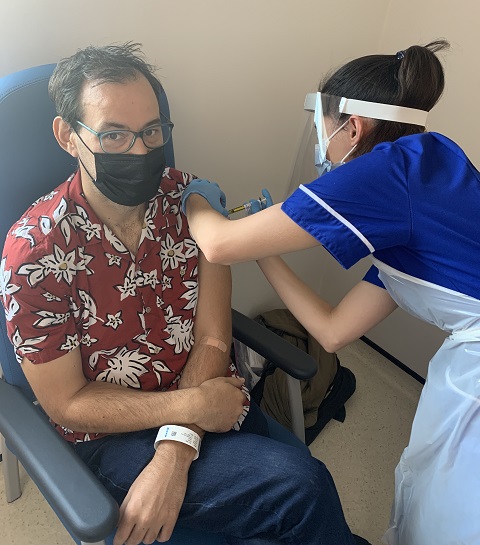
Today I took part in a COVID-19 vaccine trial (ENSEMBLE2) as a volunteer. It is the Ad26.COV2.S vaccine, an adenovirus-encoded SARS-CoV-2 spike antigen.

Right now, we can use every vaccine we can get. Down the track we can be picky, and use the best ones (if we ever actually find out which are the best! if head-to-head trials aren't done now, they will likely never be done). For now, I'd encourage everyone who is eligible to join a vaccine trial.

As many people possible vaccinated, everyone wearing a mask and eliminate unnecessary contacts. We are so close to beating this virus, every extra death at this stage is an unnecessary trajedy.


Thursday
Nov122020

Dissecting the immune characteristics of severe COVID-19 responses

  • Researchers have analysed immune cell types and numbers from the blood of healthy volunteers, COVID-19 patients experiencing mild-to-moderate effects and patients classified as severe to understand whether particular characteristics of their immune system response can identify treatment targets or indicate disease severity.
  • After comparing the T cell immune response, the researchers noted the surprising absence of a strong anti-viral response in the blood of COVID-19 patients.
  • The study identified an elevated presence of anti-inflammatory-producing regulatory T cells in the severely affected patients. If confirmed by larger studies, this could be used as a marker for identifying worsening cases and could provide an insight into the mechanism of disease pathology.

A team of immunology experts from Belgium and the UK research organisations have come together to apply their pioneering research methods to put individuals’ COVID-19 response under the microscope. Published today in the journal Clinical and Translational Immunology, their research adds to the developing picture of the immune system response and our understanding of the immunological features associated with the development of severe and life-threatening disease following COVID-19. This understanding is crucial to guide the development of effective healthcare and ‘early-warning’ systems to identify and treat those at risk of a severe response.  

One of the most puzzling questions about the global COVID-19 pandemic is why individuals show such a diverse response. Some people don’t show any symptoms, termed ‘silent spreaders’, whereas some COVID-19 patients require intensive care support as their immune response becomes extreme. Age and underlying health conditions are known to increase the risk of a severe response but the underlying reasons for the hyperactive immune response seen in some individuals is unexplained, although likely to be due to many factors contributing together.

To investigate the immune system variations that might explain the spectrum of responses, teams of researchers from the VIB Centre for Brain and Disease Research and KU Leuven in Belgium and the Babraham Institute in the UK worked with members of the CONTAGIOUS consortium to compare the immune system response to COVID-19 in patients showing mild-moderate or severe effects, using healthy individuals as a control group.

Professor Adrian Liston, senior group leader at the Babraham Institute in the UK, explained: “One of our main motivations for undertaking this research was to understand the complexities of the immune system response occurring in COVID-19 and identify what the hallmarks of severe illness are. We believe that the open sharing of data is key to beating this challenge and so established this data set to allow others to probe and analyse the data independently.”

The researchers specifically looked at the presence of T cells – immune cells with a diverse set of functions depending on their sub-type, with ‘cytotoxic’ T cells able to kill virus-infected cells directly, while other ‘helper’ T cell types modulate the action of other immune cells. The researchers used flow cytometry to separate out the cells of interest from the participants’ blood, based on T cell identification markers, cell activation markers and cytokine cell signalling molecules.

Surprisingly, the T cell response in the blood of COVID-19 patients classified as severe showed few differences from the healthy volunteers. This is in contrast to what would usually be seen after a viral infection, such as the ‘flu. However, the researchers identified an increase in T cells producing a suppressor of cell inflammation called interleukin 10 (IL-10). IL-10 production is a hallmark of activated regulatory T cells present in tissues such as the lungs. While rare in healthy individuals, the researchers were able to detect a large increase in the number of these cells in severe COVID-19 patients.

Potentially, monitoring the level of IL-10 could provide a warning light of disease progression, but the researchers state that larger-scale studies are required to confirm these findings.

“We’ve made progress in identifying the differences between a helpful and a harmful immune response in COVID-19 patients. The way forward requires an expanded study, looking at much larger numbers of patients, and also a longitudinal study, following up patients after illness. This work is already underway, and the data will be available within months,” says Professor Stephanie Humblet-Baron, at the KU Leuven in Belgium.

“This is part of an unprecedented push to understand the immunology of COVID-19”, concludes Professor Liston. “Our understanding of the immunology of this infection has progressed faster than for any other virus in human history – and it is making a real difference in treatment. Clinical strategies, such as switching to dexamethasone, have arisen from a better understanding of the immune pathology of the virus, and survival rates are increasing because of it”.  

Professor Liston and Professor Humblet-Baron both emphasized the importance of the scientific team that led the study. "This work happened during a period of incredible stress. When much of our laboratory was shut down due to the pandemic, Dr Teresa Prezzemolo and Silke Janssens were in the hospital day-after-day, preparing blood samples that were critical not just for this study but for a whole host of clinical trials on COVID-19 based in Leuven. Julika Neumann and Dr Mathijs Willemsen put their PhD research on hold to run samples, and Dr Carlos Roca and Dr Oliver Burton provided the computational support to turn the data into biological understanding. We are both incredibly proud of the entire team."


Neumann, J., Prezzemolo, T., Vanderbeke, L. & Roca, C.P. et al. Increased IL-10-producing regulatory T cells are characteristic of severe cases of COVID-19. Clinical and Translational Immunology


Thursday
Apr232020

Researchers identify new genetic cause of severe immune disorder

Severe congenital neutropenia leaves young patients to contract infection after infection, leading to life-threatening situations. A team of Leuven scientists has identified a novel genetic mutation, pointing to a new causative mechanism for this severe immune disorder.

The story starts with patient Jane Doe, now 19 years old, but diagnosed with severe congenital neutropenia when she was just 2 years old. By that time, she had already suffered an ear abscess, recurring ear infections, bronchitis, sinusitis, tonsillitis and several gum infections.

After yet another infection, this time of her intestine, a detailed investigation revealed a striking shortage of neutrophils, white blood cells that are recruited as first-responders to the site of injury or infection within our body. Having an abnormally low concentration of neutrophils in the blood is referred to as neutropenia. When it is severe and present from birth (congenital), that is where the diagnosis of severe congenital neutropenia comes in.

“Severe congenital neutropenia is very scary, because these kids develop serious infections that can be lethal for infants,” explains Erika Van Nieuwenhove. “As if that’s not enough, they are also at increased risk for other conditions such as leukemia.”

Van Nieuwenhove is both an MD and PhD, who combines clinical work in the university hospital with Carine Wouters, with research at VIB and KU Leuven under the guidance of Adrian Liston and Stephanie Humblet-Baron.

Together with John Barber and several other colleagues, she set out to understand why Jane Doe developed SCN in the first place. Van Nieuwenhove: “For up to 50% of severe congenital neutropenia patients, we have no clue what causes the disease. It was the same for our patient, whose parents are both healthy.”

A new mutation in a familiar gene

After Jane Doe tested negative for mutations in all the genes with known ties to neutropenia, the researchers performed whole exome sequencing, probing every gene in the DNA, to trace back the genetic defect underlying the disorder.

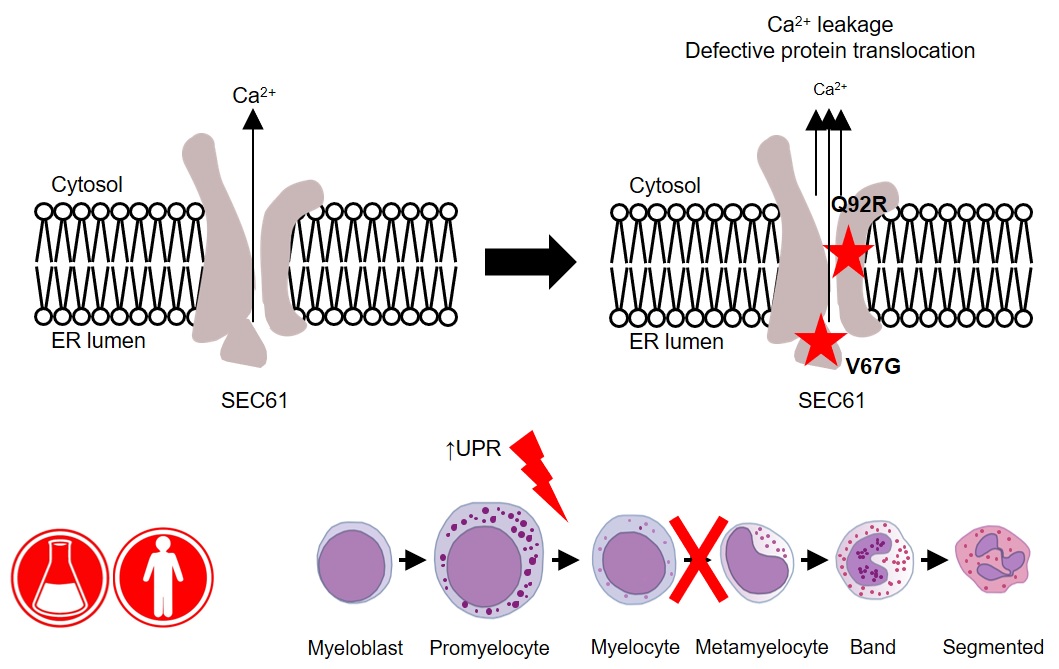
“We identified a new mutation in a gene called SEC61A1, which encodes one of three subunits of the Sec61 complex. This molecular complex plays a crucial role in both protein transport and in maintaining the calcium balance of the cell,” explains Humblet-Baron. “Our experiments revealed that the genetic defect led to both a lower expression and a reduced efficacy of the SEC61A1 protein, and that these quantitative and qualitative defects in turn disturb neutrophil differentiation and maturation.”

Interestingly, SEC61A1 has recently been picked up in other studies that were not focused on neutropenia. Different mutations in the same gene were reported in two families with a rare kidney disease and in two additional families with an antibody deficiency.

“The fact that there are different mutations in the same gene indicates there may be overlapping mechanisms among the different disorders. With the low number of currently known patients, it is still too early to predict which mutations can lead to which symptoms,” explains Liston.

“What’s clear from our findings is that SEC61A1 mutations can also cause severe congenital neutropenia. Considering this gene’s link with other disorders, the clinical implications of our work reach far beyond the patient with whom it all started here in Leuven.”

Read the original paper: Defective SEC61α1 underlies a novel cause of autosomal dominant severe congenital neutropenia. Van Nieuwenhove et al. JACI 2020

Tuesday
Mar312020

When will we have a Coronavirus vaccine?

Vaccines are very unusual medicines. Most medications are developed for the purpose of treating sick people. Vaccines, on the other hand, are developed for the purpose of treating healthy people, ideally for an infection that most people won't get exposed to. This means that vaccine development is in one way much harder than any other drug. This is because every medication needs to do more good than harm to the person receiving it. A drug designed to treat a disease has an easy cost-benefit ratio to achieve: if that disease is serious and the drug is effective in at least some people, then even relatively frequent adverse effects may be tolerated. In the case of vaccines, however, because you are treating healthy people the cost-benefit ratio means you can almost never have any substantial adverse effects and the vaccine has to work in almost every person. Add on to this the fact that vaccines are designed to give ideally life-long protection. A drug for a disease might be acceptable if it worked if taken once a day. A vaccine should give at least 10 years of protection, although there are a few exceptions. Plus vaccines are most effective when everyone gets them, meaning you need to be able to mass produce them for almost nothing and they should be stable even without cold storage, etc. In short, vaccines are exceptionally difficult to make because they have to be nearly perfect before they get approved.

On the other hand, vaccines are easier to make than most other drugs. For most drugs, we first need to understand the molecular basis of disease in incredible detail, down to the atomic precision of the key proteins. Only then can we start to design small molecules that disrupt pathology, with a long and painful process of screening and improving that leaves most drug candidates dead before they hit a trial. Even once we get into patients, we are still highly likely to find that the drugs do more harm than good, or are only effective in a handful of patients. Vaccines, on the other hand, are not really drugs at all. You can best think of a vaccine as a trigger to instruct the body on how to make its own natural drugs, antibodies. The more we know about a virus the better we can design the vaccine trigger, but a lot of the best vaccines just come from randomly blasted bits of dead virus. There are exceptions, where the viruses biology works against us. HIV and herpes viruses are really difficult to make vaccines against, because they hide out inside our body. Fortunately, COVID-19 looks like a fairly standard virus in this respect, and is unlikely to be unusually problematic. There are already promising small-scale trials indicating that antibodies against COVID-19 would work. These were done by taking antibodies from a recovered patient and injecting it into the sick patient, but the principle is the same. There is still some concern that COVID-19 may be more complicated, based on some results indicating that recovered people can get reinfected, but at the moment this is most likely due to false negative screening rather than a true re-infection. It does need to be considered though - we just don't know enough about the biology to be sure.

With vaccines being both harder and easier to make than other drugs, how long will it be before we get a vaccine? Here I don't have any inside commercial knowledge, but it seems very likely that we will have a vaccine developed, tested and approved in 2020. The key here is that the cost-benefit ratio is completely different for a COVID-19 vaccine than it is for a normal vaccine. As I said, normal vaccines have to be almost perfect before they are approved, with any serious side-effects resulting in the vaccine being shelved. During a global pandemic, however, the risk of adverse effects needs to be balanced against the advantage of moving fast. Let's say we got a vaccine that only worked in 50% of people and caused minor adverse effects (sore arm for a week) in 10% of people. Right now, who wouldn't line up to get vaccinated? 

So expect a poor vaccine in 2020, assuming that immunologists are given sufficient funding to develop it. It will skip a lot of the normal safety and efficacy steps, and it will likely not protect everyone and possibly cause side-effects. That said, it would still be a useful tool for controlling a pandemic. Then towards the end of 2021 I would expect to see the roll-out of better vaccines, with higher levels of efficacy and fewer adverse effects. At some point in the future, every child will likely be given a vaccine for COVID-19 as part of their routine vaccination schedule, but that is much more likely to be a third- or forth-generation vaccine, with the optimal properties that we expect.

Monday
Mar232020

Lab tech position

Job opportunity: we need a junior lab technician at the University of Leuven to be trained for PBMC isolation and flow cytometry analysis, to place a key role in clinical trials. We are after someone who is willing to listen and takes their work seriously. If you already know flow cytometry, great, if not, we will train you. Apply here, and take on a job that matters. 


Sunday
Dec012019

Congratulations Dr Erika Van Nieuwenhove!

A huge round of congratulations for Dr Erika Van Nieuwenhove, who successfully defended her PhD. Erika set for gold standard for PhD defences, with an outstanding presentation and masterful question time. Erika's thesis was on inborn errors of immunity, with her PhD covering multiple new genetic mechanisms for PIDs, including mutations in ADA2 and Ikaros, plus a machine learning-driven approach to the diagnosis of JIA. The work is not yet finished either - stayed tuned for more Van Nieuwenhove papers on new genetic causes of neutropenia! A future leader in pediatric immunology and rheumatology!
Wednesday
Apr242019

Dokter Algoritme

Algoritmen kunnen inzichten bereiken waar een mens moeilijk toe komt. Computeralgoritmen kunnen almaar beter moeilijke diagnosen stellen, soms zelfs beter dan artsen. Immunologe Erika Van Nieuwenhove van de Leuvense tak aan het Vlaams Instituut voor Biotechnologie (VIB) en haar collega’s melden in Annals of the Rheumatic Diseases dat ze een zelflerend algoritme hebben ontwikkeld dat met bijna 90 procent zekerheid artritis bij kinderen kan vaststellen, louter op basis van een bloedtest.

Het gaat om de vaakst voorkomende vorm van reuma bij kinderen, maar omdat de ernst en de evolutie van de symptomen sterk kunnen variëren, is een diagnose stellen niet altijd gemakkelijk. Het algoritme evalueert alleen de samenstelling van het immuunsysteem van de patiënten. Het zal nuttig zijn om te bepalen welke behandeling aangewezen is.

Knack - 24 Apr. 2019 - Page 86

Wednesday
Mar132019

Using machine learning to diagnose disease

Profiling the immune system in paediatric arthritis patients offers hope for improved diagnosis and treatment

A team of scientists from VIB and KU Leuven has developed a machine learning algorithm that identifies children with juvenile arthritis with almost 90% accuracy from a simple blood test. The new findings, published this week in Annals of the Rheumatic Diseases, pave the way for the use of machine learning to improve diagnosis and to predict which juvenile arthritis patients may respond best to different treatment options. The work was led by Professor Adrian Liston, a group leader at the Babraham Institute in Cambridge, UK and at VIB and KU Leuven in Leuven, Belgium.

Juvenile idiopathic arthritis is the most common rheumatic disease in children, but it presents in many different severities and forms. This diversity makes clinical assessment and patient classification difficult.

A team of researchers at Belgian research organisations VIB, KU Leuven and UZ Leuven undertook a detailed biological characterisation of the immune system of hundreds of children with and without juvenile arthritis to help the diagnosis or treatment decisions for this disease.

“Essentially, we took blood samples from more than 100 children, two thirds of whom had childhood arthritis,” explains Erika Van Nieuwenhove (VIB-KU Leuven), and first author of the study. “We analysed their immune system at a greater level of detail than was ever done before for this disease, and simply using this data we then used machine learning to see if we could tell which children had arthritis.”

The results were quite remarkable: the algorithm was about 90% accurate at identifying the children with the disease. “Using only information on the immune system, and no clinical data at all, we could design a machine learning algorithm that was about 90% accurate at spotting which kids had arthritis,” says Professor Adrian Liston (Babraham Institute, Cambridge, UK and VIB-KU Leuven). “This result is a proof-of-principle demonstration that immune phenotyping combined with machine learning holds huge potential to diagnose disease. Similar approaches could be applied to improve patient selection for treatments and clinical trials.”

The researchers are hopeful about the impact of this research in improving patient outcomes. “The tool needs further validation but otherwise there are no scientific barriers to this approach being quickly translated to the clinic,” comments Professor Carine Wouters (UZ Leuven), who was the clinical lead for this study. “Down the line, we could use this kind of detailed classification information—and machine learning analysis—to identify which patients will respond best to specific treatment options.”