Chronisch Vermoeidheidssyndroom Uitgelicht
Tuesday, May 5, 2015 at 12:57PM
Medicine Becoming a Scientist
Virus Fighter
Build a virus or fight a pandemic!
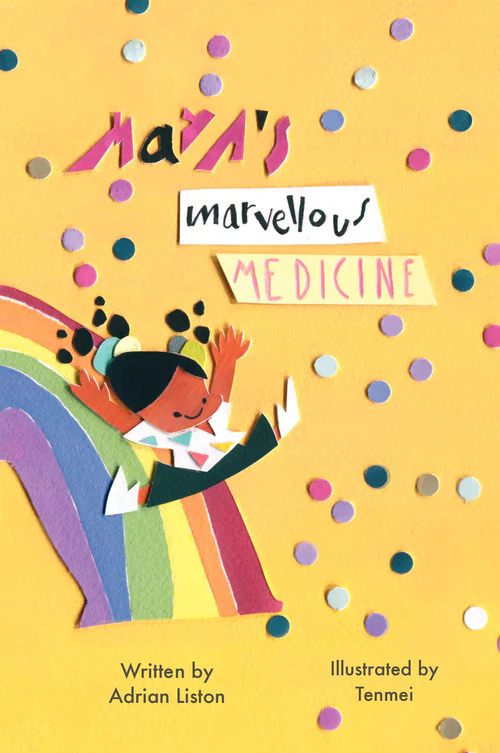
Maya's Marvellous Medicine
Battle Robots of the Blood
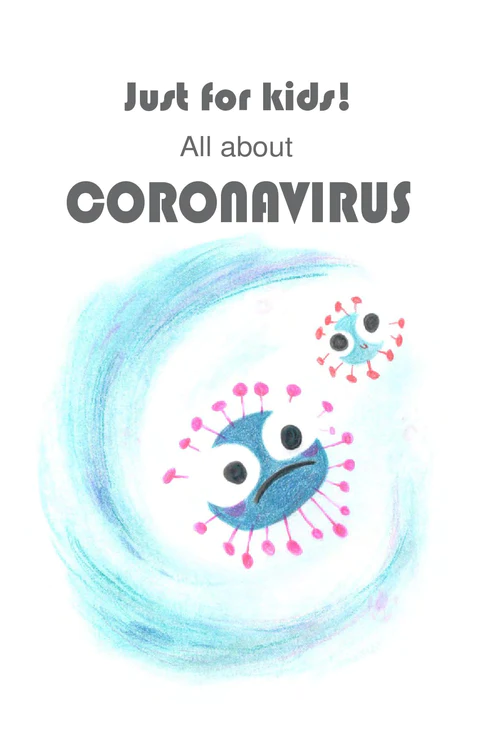
Just for Kids! All about Coronavirus
Learn about our spin-off, Aila Biotech!
Tuesday, May 5, 2015 at 12:57PM
Medicine
Wednesday, April 8, 2015 at 1:19PM I am a strong supporter of animal rights. I would like to see more animal rights enshrined in the law. Although I am vegetarian and do not eat animals, I do perform animal research - because there is real medical value that can only be gained through animal experiments. To rectify the discontinuity between these positions, I support the animal ethics procedures, where every experiment to be performed on an animal needs to be carefully examined by an animal welfare committee prior to approval, and only important experiments with the minimal pain necessary can be performed. This principle should be strengthened and even extended to other instutitions that work with animals, such as farms, pet stores and zoos.
That said, I do not support the massive amounts of paperwork that are required to run an animal research laboratory. This is the paperwork that I needed to submit just to determine which forms need to be filled out in order for me to breed mice:

That right - that pile of paper is the pre-application just to breed mice, not to do any actual experiments. Any person can buy mice at a pet store - put a male and a female in a cage and they breed, yet no forms are needed. Did you know that mice even breed in the wild - and without filling out forms first!
Animal ethics application forms should be about ensuring animals are not mistreated, they should not be a covert attempt to shut down all animal research by making it impractical for scientists to run their experiments. By making animal ethics applications so absurdly bureaucratic, they actually decrease the scrutiny and fail to do what they are meant to achieve - decrease the suffering of animals. A simple stream-lined procedure would actually increase animal welfare while still allowing key medical research to be performed.
ethics
Monday, April 6, 2015 at 7:59PM In recent weeks, two comment pieces have been published calling for a moratorium on germ-line genome editing. Germ-line genome editing is now feasible, even easy, thanks to new genetic engineering tools such as CrispR-Cas9. It has the potential to fix genetic diseases such as Huntington's, severe combined immunodeficiency and cystic fibrosis. So why is there suddenly a call for a moratorium on curing these diseases? Are there new scientific results questioning the safety or efficacy? No. In fact new studies are making the approach more and more realistic every day. This moratorium call is just a commentary, not based on any new science. The only reason it made headlines is that the two commentaries were published in the leading journals, one in Science and one in Nature, and because the 23 authors include some very preeminent scientists (mandatory to have your comment pieces published in Science and Nature). This was widely reported as "Scientists seek ban on editing human genome", and I expect that various bans will indeed soon be implemented across the world.
My question - as a scientist who works on genome editing using these very tools - is why? Why is there a call for a ban? The case has simply not been made that there is any ethical conundrum. The "problem" is that these cures would not only cure the disease in the child, but would also prevent the disease being passed on to their children. And why exactly is that a bad thing? "Future generations" - yadda yadda. We make decisions that influence future generations every single day. Do you think future generations will complain about not having cystic fibrosis? If need be, they could easily engineer the mutation back in, not that anyone would. You know what else potentially causes germ-line mutations? X-rays, but we don't ban them because the benefits are very large and the risks are very small. Even poverty causes heritable modification to the genome, so let's not pretend that we've never made a decision that alters unborn generations.
To me, all this moralising is more of the same that we have heard for decades about "designer babies". I'm sick and tired of hearing about the hypothetical of chosing a baby's eye colour. That is probably never going to happen, it would be easy to ban if it did start to happen, and is it really any worse than the current practise of grooming children for beauty pagents or gymnastics from an early age?
The hypotheticals that bioethicists seem to be overwhelmed about always seem to be in the indefinite future. So I'd like to give a here-and-now question to the authors of those comment pieces, and to bioethicists in general. Is it ethical to withhold medicine to children today, simply because of some ill-defined unease you have? The picture below is of a child with Olmsted disease, which we work on in the lab. Warning: the picture is not nice, but this is exactly the type of disease which could be potentially cured with the new genome editing tools.

Olmsted disease is caused by a single base-pair mutation in the gene TRPV3. It is a prime candidate for genome editing cures, but any cure would run the "risk" of not just correcting the mutation in the skin, but also of correcting the mutation in the germ-line. Is it ethical to cure such a child at the "risk" of also curing their future children? I would argue that not only is it ethical, but it is unethical to not try.
There are horrible diseases which strike down children that may never have any feasible cure other than genome editing. To not pursue that sole avenue of research would be a disgrace, an ethical failure of the highest magnitude. I, for one, will ignore any self-proclaimed "moral authority" who tells me not to work for a cure of these diseases. Unless my research is proclaimed illegal I will continue my work - and if it is proclaimed illegal I'll campaign against the unethical laws that shut down the sole hope of families with incurable genetic diseases. Ethical action requires a careful consideration of the consequences, but equally, inaction also requires a a consideration of the ethical consequences. Unless a strong case is made that the consequences of genome-editing for future generations are worse than the consequences of not using genome-editing for this generation, it would be unethical to abide by a moratorium.
Friday, April 3, 2015 at 5:31PM 
Not just an excuse for a cute picture - look at the hind limbs that develop in the baby sting-rays - completely non-functional in the adult, but you can see that they are part of the developmental process. Evolution is messy, and always works from what is pre-existing, rather than what would be ideal.
evolution
Friday, March 20, 2015 at 8:40AM Sometimes science works by chance.
In a mouse colony that we were breeding to study myeloproliferative disease, just by chance we had a few mice that just started shaking. Seizing the chance to study these further, we found out that our colony had generated a spontaneous mutation in the gene Mbp, a structural component of the insulating layer that keeps nerves insulated (in the same way that the plastic coating of metal wires is required for electricity cables). Without insulation of their nerves, the mice developed an erratic shaking and later on developed seizures. This work ended up revealing new aspects of the regulation of nerve insulation genes, and has been published in the journal Brain Research.Read more: Staats, Pombal, Schönefeldt, Van Helleputte, Maurin, Dresselaers, Govaerts, Himmelreich, Van Leuven, Van Den Bosch, Dooley J, Humblet-Baron*, Liston*.Transcriptional upregulation of myelin components in spontaneous myelin basic protein-deficient mice. Brain Res. 2015 in press.
Liston lab,
neuroscience
Thursday, March 19, 2015 at 4:08PM In a new study out by the Autoimmune Genetics Laboratory, we have discovered a new genetic cause for early-onset systemic lupus erythematosus - mutation in the gene IFIH1. In 2014, mutations of this gene were independently found to cause the neurodegenerative disease Aicardi-Goutières syndrome (AGS). Despite lupus and AGS manifesting as clinically different symptoms, this study shows that mutation in the same gene causes both diseases. The mutation in IFIH1 works via driving excessive production of the cytokine IFN alpha, so this discovery opens up the possibility for treatment once anti-IFN alpha antibodies (currently in development) are approved for use.

Read more: Van Eyck, De Somer, Pombal, Bornschein, Frans, Humblet-Baron, Moens, de Zegher, Bossuyt, Wouters* & Liston*. IFIH1 mutation causes systemic lupus erythematosus with selective IgA-deficiency. Arthritis Rheumatol. 2015, in press.
If you would like to support our clinical research, and allow us to take on more cases like this one, you can make a tax-deductable donation the Ped IMID fund, by transferring to IBAN-number BE45 7340 1941 7789, BIC-code: KREDBEBB with the label "voor EBD-FOPIIA-O2010".
Liston lab,
Medicine,
genetics,
immunology,
neuroscience
Tuesday, March 17, 2015 at 10:17AM A new fund has been set up to drive bench-to-bedside research for children with inflammatory immune diseases. The Ped IMID fund (Fonds Pediatrische Immuun-inflammatoire Aandoeningen) was set up by Prof Carine Wouters (Pediatric Rheumatology), Prof Patrick Matthys (Immunobiology) and Prof Adrian Liston (Autoimmune Genetics) to build on our strong research cooperation. More than merely "translational research", where basic science is pushed into the clinic, our group performs "dialog research", where we meet regularly to discuss the clinic and the science of the most difficult-to-treat patients. We use the clinic to inform the research and the research to inform the clinic, and have already had multiple break-throughs in understanding and treating children with rare inflammatory diseases.

If you would like to support our research, and allow us to take on more cases, you can transfer a tax-deductable donation to IBAN-number BE45 7340 1941 7789, BIC-code: KREDBEBB with the label "voor EBD-FOPIIA-O2010".

Liston lab,
Medicine,
genetics,
immunology
Saturday, March 7, 2015 at 8:47AM 

... I just hope Annemarie and Dean warned them that science is a lifestyle choice, not a career.
Friday, March 6, 2015 at 9:57AM 
Many thanks for Annemarie van Nieuwenhuijze and Dean Franckaert for designing and implementing a school outreach program.
Friday, February 6, 2015 at 12:28PM As part of an ERC funded research program, the Autoimmune Genetics Laboratory is searching the genomes of young children with severe immune diseases to look for novel genes (and hopefully treatments). In a collaboration with Prof Carine Wouters and Prof Isabelle Meyts at UZ Leuven, we found mutations in a new gene, CECR1, in three severely ill children. Two of the children were born with a severe immune deficiency, making them prone to infections, while the third developed an inflammatory disease known as Castleman's disease. Mutations in the same gene, which produces the protein ADA2, were independently found by two other groups to give vascular disease and early-onset stroke.
These studies identify ADA2-deficiency as a previously undiagnosed primary immunodeficiency which includes components of immune deficiency, inflammation and vasculopathy. Most importantly, this new diagnosis comes with a successful cure: prior to genetic diagnosis, our clinical collaborators were able to successfully treat the disease with bone-marrow transplanation (for the immunodeficient patient) or tocilizumab (for the Castleman's disease patient). These results therefore not only add to our knowledge about medical genetics, but also provide a direct diagnosis-treatment pathway for any new children identified with these severe diseases.

Read more:
Van Eyck, Hershfield, Pombal, Kelly, Ganson, Moens, Frans, Schaballie, De Hertogh, Dooley, Bossuyt, Wouters, Liston* and Meyts*. Hematopoietic stem cell transplantation rescues the immunologic phenotype and prevents vasculopathy in patients with adenosine deaminase 2 deficiency. J Allergy Clin Immunol. 2015 Jan;135(1):283-287.e5.
Van Eyck, Liston and Wouters. Mutant ADA2 in vasculopathies. N Engl J Med. 2014 Jul 31;371(5):480
Van Eyck, Liston and Meyts. Mutant ADA2 in vasculopathies. N Engl J Med. 2014 Jul 31;371(5):478-9.
If you would like to support our clinical research, and allow us to take on more cases like this one, you can make a tax-deductable donation the Ped IMID fund, by transferring to IBAN-number BE45 7340 1941 7789, BIC-code: KREDBEBB with the label "voor EBD-FOPIIA-O2010".
Liston lab,
Medicine,
genetics