Navigation
Career development

See our career development resources!

Self-doubt in science

Public engagement

Becoming a Scientist

Read online for free

Print your own copy

Virus Fighter

Build a virus or fight a pandemic!

Play online

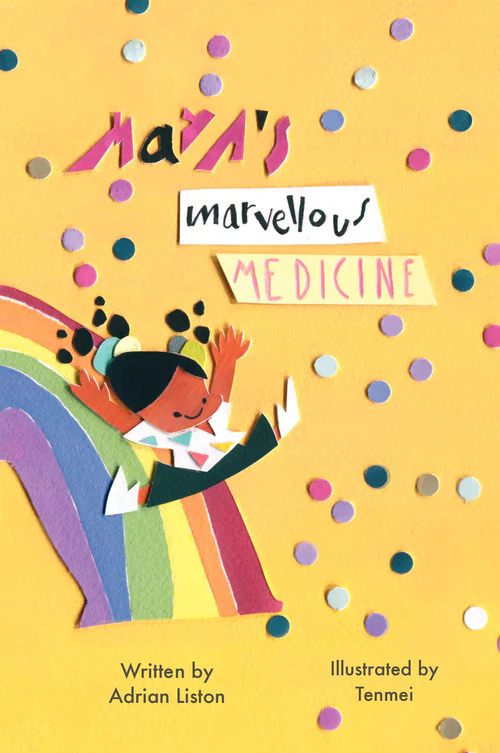
Maya's Marvellous Medicine

Read online for free

Print your own copy

Battle Robots of the Blood

Read online for free

Print your own copy

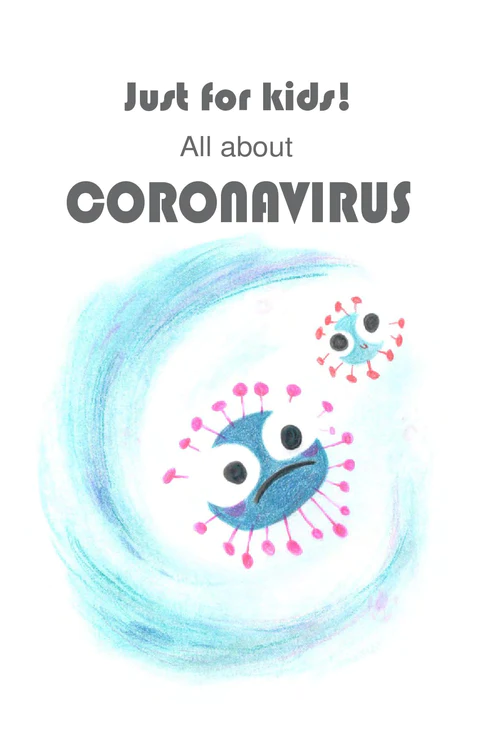
Just for Kids! All about Coronavirus

Read online for free

Print your own copy

Archive
Aila Biotech

Learn about our spin-off, Aila Biotech!

Entries by Adrian Liston (500)

Friday
Sep292017

Prof Susan Schlenner: making a career in science

Next week Dr Susan Schlenner starts as a tenure-track professor in our laboratory.

Growing up in East Germany, Susan started her scientific training with Prof Hans-Reimer Rodewald at the University of Ulm. From 2003-2008, Susan worked on her PhD on protection from the toxicity of snake venoms (J Exp Med, 2007). Dr Schlenner stayed in Hans-Reimer’s lab for a mini-post-doc on T cell development, generating IL7Ra-Cre mice to trace the fate of early T cell development (Immunity, 2010). These mice have become one of the key tools of the field, leading to dozens of high-level middle authorships.

In 2009, Dr Schlenner left to Harvard, to post-doc with Prof Harald von Boehmer. At this point, she entered the regulatory T cell field, again creating new mouse strains to redefine the basic biology (J Exp Med, 2012).

We were lucky enough to recruit Susan in 2012. We had just decided that we needed a top-level molecular biologist when Susan turned up. She immediately solved our problems on a transgenic that we had been struggling with for years, and set up a molecular biology platform in the lab. Susan designed her own high-level projects, and secured independent funding for them, which she is now pursuing with her own team. However Susan has always been ready to drop everything to help out the lab, playing a pivotal role in getting our diabetes story in Nature Genetics, and spending her last days before giving birth generating the key preliminary data for an ERC grant for the lab.

When CrispR editing of mammalian cells first burst onto the scene in 2014, Dr Schlenner spend several years learning the new technique, importing all the tools to Leuven and optimising the process for high throughput genome-editing. The creation of the MutaMouse Core facility was the outcome of this patient work, and will revolutionise biomedical science in Leuven.

With Dr Schlenner achieving the hard-won honour of a professorship, I see lessons in her success that other post-docs could learn from:

1) Train with the best people. In the Rodewald and von Boehmer labs, Susan was surrounded by top scientists doing exciting work. An excellent environment is essential to blossom as a scientist

2) Learn how to do proper experiments. “Controls, controls, controls”, is Susan’s motto, every experiment needs the right controls to understand the result, otherwise it is just expensive play

3) Be prepared to work hard and work long. Experiments often don’t work; it takes grit and determination to tear the hidden secrets out from nature. To create her IL7Ra-Cre strain, Susan generated more than 3000 ES cell clones to screen, before finding the one single clone that set her career on a roll. Others would have given up early, and switched to an easier project, but Susan stayed the course. Persistence is a virtue.

4) Always keep on learning. So often we are scared to enter a field we don't know, or pick up a new technique. It is comforting to stay doing the experiments we already know how to do. Susan has always been prepared to start from scratch as a beginner, learning new techniques such as CrispR.

5) Publish top papers. Immunity and J Exp Med papers as first author, a Nature Genetics as co-last. It sounds obvious, but the top papers are the bed-rock upon which your career is built. If you ever get the opportunity to push a story into the very top level, you seize it and put in whatever effort it takes.

6) Make yourself valuable. Susan has always been a team-player, spending her time teaching others and rescuing difficult experiments. Susan always made sure that the people around her could succeed, rather than only looking out for herself. This was not just rewarded in her dozen middle-authorships, it also meant that she was always someone that her promoters were willing to support in return. Susan’s professorship is in no-small-part a direct consequence of the MutaMouse facility that she was building for the university – she made herself so valuable to the university that they needed to give her a position to make sure she stayed.

7) Stay in the game. It can be depressing looking at the odds of success in academia, but if you are not willing to put in the years, then you have no chance. Susan post-doc’d for nearly 10 years before achieving her professorship: don’t give up on your ambitions.

Thursday
Sep142017

Gregor Mendel's scientific publications

We were at Gregor Mendel's abby in Brno (Czech Republic) recently, where the key work on pea genetics was performed. Smooth vs wrinkly, green vs yellow, nicely segregating in pea crops.

In retrospect, these were key experiments for the formation of genetics, but you can hardly blame anyone for missing their importance for decades: Mendel was hardly a science communicator. He hardly published his work, and then only in obscure journals, and presented his research in front of a grand total of 40 scientists. Science needs communication! 


Thursday
Sep072017

The importance of stupidity in scientific research

Friday
Sep012017

Garvin Institute, Sydney

Me with my host, Prof Shane Grey, and former PhD mentor, Prof Chris Goodnow

Lunch with post-docs and PhD students to discuss science and science careers

Monday
Aug282017

As seen in the Malaghan Institute, New Zealand  

Sunday
Aug272017

Immunology Group of Victoria

The 2017 IgV meeting in the Yarra was a beautiful reminder of what a vibrant and friendly community Australian immunology is. Top level science in one of the most  internationally creative hubs for medical research, coupled with a whole lot of fun. Perfect.

Friday
Aug252017

Academic careers are stressful

New report from the Royal Society and Wellcome Trust, in the UK:

* The majority of academics working at universities are stressed

* Academics have a higher risk of developing mental health issues than other professionals (37%)

* Levels of burn-out are far higher than average and comparable to high risk groups such as health-care workers

* Main problems are lack of job security, limited support from management and the weight of work-related demands

(but we shouldn't stress - science is a great gateway career if you want to leave later on)

Wednesday
Aug232017

Journal club: The effect of gender (not sex!) on the genome

One of my pet peeves is when scientists use "gender" (i.e., identity) when they actually mean "sex" (i.e., anatomy). It is typically done to avoid embarrassment, but it is imprecise, and the difference can be important. The short-cut for gender vs sex is usually "sex is biological, gender is cultural", but this short-cut is also wrong, since culture can impact on biology.

Take this Nature Genetics paper, from the Gibson lab. They looked at eQTLs in human blood, which is basically the effect of genetic variation on gene expression. The study was performed on Berbers in Morocco, in both a modern urban setting and a traditional rural setting:


When looking at gene expression changes in men and women from urban areas (green and blue, below), there is basically complete overlap between men and women. However when you look at the rural traditional areas, with strict cultural separation of men and women (red, below), there is almost complete separation between the men and the women at the transcription level.


In short, men and women are biologically different only because of the gender roles imposed in the rural setting! The social construct of gender can actually substantially change our biology. A good reminder that whenever we see an effect in humans that we think is due to sex, we need to remember that it could actually be an impact of imposed culture.

Read the full paper: Idaghdour et al, "Geographical genomics of human leukocyte gene expression variation in southern Morocco", Nature Genetics 2010. 42(1):62-7

Friday
Aug182017

Uncorking the muse: Alcohol intoxication facilitates creative problem solving

Uncorking the muse: Alcohol intoxication facilitates creative problem solving

Andrew F. Jarosz, Gregory J.H.Colflesh and Jennifer Wiley

Consciousness and Cognition. 21(1) 2012, Pages 487-493
 
That alcohol provides a benefit to creative processes has long been assumed by popular culture, but to date has not been tested. The current experiment tested the effects of moderate alcohol intoxication on a common creative problem solving task, the Remote Associates Test (RAT). Individuals were brought to a blood alcohol content of approximately .075, and, after reaching peak intoxication, completed a battery of RAT items. Intoxicated individuals solved more RAT items, in less time, and were more likely to perceive their solutions as the result of a sudden insight. Results are interpreted from an attentional control perspective.

Thursday
Aug172017

Factchecker: 'De Belg is steeds minder resistent tegen bacteriën'

‘Belg is steeds minder resistent tegen bacteriën’

 Uit Knack van 16/08/17


Ondernemer Kurt Van Tendeloo (Hygieia), Gazet van Antwerpen

De afgelopen weken hadden opvallend veel jongeren op bivak te kampen met maag- en darmproblemen. ‘In deze periode woekeren bacteriën meer dan anders’, zei Kurt Van Tendeloo daarover in Gazet van Antwerpen. Zijn bedrijf Hygieia geeft advies over voedselveiligheid en allergenenbeheer, en gaf dat ook al aan jeugdverenigingen specifiek voor op kamp, lazen we in de krant. ‘De dioxinecrisis heeft van België een land met extreme aandacht voor voedselveiligheid gemaakt’, zei Van Tendeloo. ‘Positief, maar hierdoor is de Belg minder resistent geworden omdat we zo weinig met bacteriën in aanraking komen. Vroeger werden kinderen ook ziek op kamp, maar niet met twintig tegelijk.’

Dat ons overmatig antibioticagebruik bacteriën doet muteren waardoor die geneesmiddelen almaar minder goed werken, is een gekend probleem. Wat Van Tendeloo zegt, gaat evenwel niet over antibioticaresistentie, maar over ons immuunsysteem. Is de ‘Belg steeds minder resistent tegen bacteriën’, zoals Gazet van Antwerpen kopte? Waarop steunt die uitspraak?

‘Niet op wetenschap’, zegt aan de telefoon Van Tendeloo, die kok is van opleiding. ‘Maar ik sta al meer dan twintig jaar in het vak, in grootkeukens, en zetel met actuele kennis van zaken in commissies die de voedselveiligheid daar bewaken. Voedselveiligheid is van levensbelang, in het bijzonder bij kwetsbare groepen zoals kinderen of senioren. Maar de appel die vroeger thuis op de grond viel, werd afgewassen en toch opgegeten. Vandaag niet meer. En dat breekt ons zuur op.’

Leert dat ook de wetenschap? We komen inderdaad minder in aanraking met bacteriën en allergenen, allerhande stoffen en microben die ons afweersysteem prikkelen, zegt viroloog Marc Van Ranst (KU Leuven). ‘Het aantal keizersneden is gestegen, moeders geven meer flessenvoeding dan vroeger, en we groeien meer op in stadsomgevingen dan op de boerderij’, zegt hij. ‘Het aantal allergieën is de afgelopen twintig jaar verdubbeld. Dat verklaren een aantal wetenschappers – er is discussie – met de zogeheten hygiënehypothese, die zegt dat contact met allergenen in onze jeugd cruciaal is, om later allergieën te voorkomen.’ Maar een maagdarminfectie is geen allergie, beklemtoont Van Ranst. ‘Vandaag halen die opgebroken jeugdkampen de media, maar niets wijst erop dat er meer incidenten zouden zijn dan vroeger. Die jongeren zijn hoogstwaarschijnlijk geteisterd door een norovirus. Een derde van alle mensen is daartegen genetisch resistent, twee derde wordt er ziek van. Dat is de grootte van zo’n epidemie als je die z’n gang laat gaan. Honderd jaar geleden was dat zo. En dat is vandaag niet anders.’

We zijn meer gevaccineerd tegen aandoeningen waaraan kinderen vroeger stierven – denk aan polio, mazelen, rode hond – en in die zin net weerbaarder, voert Van Ranst nog aan.

Maar ook als we die kinderziektes buiten beschouwing laten, is er meer tegen dan voor Van Tendeloo’s claim. ‘Het aantal bacteriële doden stijgt niet’, zegt immunoloog Adrian Liston (KU Leuven). ‘Wel is er een verschuiving bezig. Het klopt dat ons afweersysteem het moeilijk heeft met uitdagingen die het niet vaak tegenkomt. Aangezien we almaar meer in steden wonen en minder op het platteland, worden we gemiddeld minder goed in het neerslaan van rurale infecties – tegen grondbacteriën zoals Legionella, bijvoorbeeld – en beter in het afweren van infecties die mensen op elkaar overdragen. Maar in slotsom zijn we sterker dan ooit tevoren.’

Conclusie:

Omdat we volgens wetenschappers geen systematisch probleem hebben met neerslaan van bacteriën, beoordeelt Knack de stelling als grotendeels onwaar.