Navigation
Career development

See our career development resources!

Self-doubt in science

Public engagement

The Professor, the Pipette

& the Path Not Taken

Print your own copy

Digital on Kindle

Becoming a Scientist

Read online for free

Print your own copy

Virus Fighter

Build a virus or fight a pandemic!

Play online

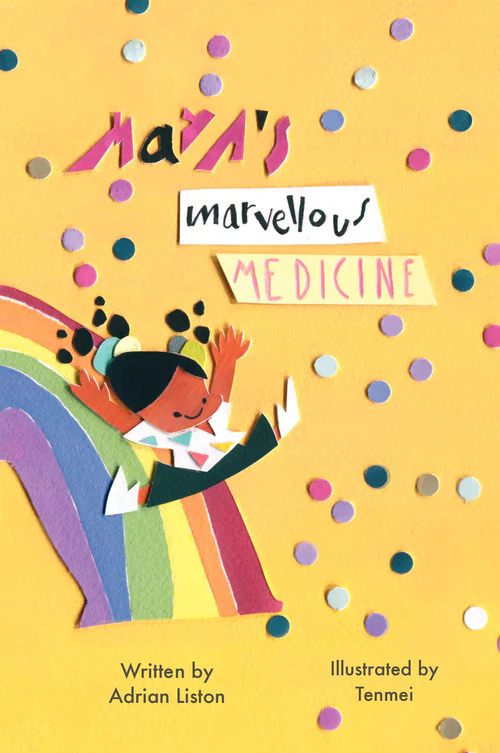
Maya's Marvellous Medicine

Read online for free

Print your own copy

Battle Robots of the Blood

Read online for free

Print your own copy

Just for Kids! All about Coronavirus

Read online for free

Print your own copy

Topics
Can't display this module in this section.
Archive
Can't display this module in this section.
Aila Biotech

Learn about our spin-off, Aila Biotech!

Entries in Liston lab (254)

Wednesday
Jul022025

Understanding vaccination in transplant patients

We have a new systems vaccinology paper out at npj Vaccines!

The study tackles the problematic question of why transplant patients responded so poorly to the COVID vaccine. While most people had great antibodies from a single dose, only half of transplant patients have responded even after three!

We took blood from 20 healthy, 31 lung transplant and 59 kidney transplant patients prior to vaccination, and profiled 444 immunological parameters, to get a comprehensive systems immunology profile. We then followed who did and didn't respond to the vaccine, to find the immunological associates.

First up, there are clinical effects: Vaccine response was especially poor soon after transplantation, and in patients on immunosuppressive cocktails, especially those including MMF. Even taking this into account, there were immunological drivers associated with poor response.

As you might predict, the patients that responded best were those with an immune profile that had returned closer to normal post-transplantation. In fact, you could predict vaccine response with 93% accuracy just based on 10 immune parameters.


Oddly though, some patients were able to hobble together a poor but detectable response after two shots. These patients didn't have a more normal immune profile, and had quite unusual relationships between immune populations, suggesting that they had put together a poor-but-functional "kludge".


This study was a joint initiative from our lab, Arnaud Marchant's lab at at ULB and Stephanie Humblet-Baron's lab at KU Leuven. 

Huge thanks to all team members, especially Nicolas Gemander, Julika Neumann, Rafael Veiga and Isabelle Etienne for their leadership roles.

Biggest thanks of all to the patients who volunteered for the study!


Read the full paper here

Tuesday
Jul012025

Lab punting

Tuesday
Dec172024

Congratulations Dr Magda Ali!

Congratulations Dr Magda Ali! Our latest successful PhD viva was from the amazing Magda, finishing off a great PhD.

Well done Magda!

Thursday
Nov072024

Moments before thesis submission...

Monday
Oct282024

Lab retreat 2024

Tuesday
Oct222024

Congratulations Dr Ntombizodwa Makuyana!

Congratulations Dr Ntombizodwa Makuyana! Our 24th PhD completion from the lab, and our 1st Cambridge PhD defence! Way to go Tombi! 

Wednesday
Sep042024

Designer IL2 mutations for clinical use

We have a new pre-print out, on novel designer IL2 mutations!

IL2 is a powerful immunomodulator, but the dual roles make it complex to use, and many designer mutations reduce bioactivity or result in poor production. This makes it much harder to move these muteins to the clinic.

Rob van der Kant, Joost Schymkowitz and Frederic Rousseau from the VIB Switch lab took up the challenge of designing new IL2 mutants that not only improve the specificity for Tregs or CD8 T cells, but also maintain bioactivity and actually improve production capacity. They sent the designs over to us to test!

Great work from Amy Dashwood screened these mutations designs in vitro, with in vivo testing by Ntombizodwa Makuyana resulting in a set of mouse and human IL2 muteins with the desired biological properties. In particular we solve some of the common issues with IL2 muteins by considering the bound and unbound structures. For example, to make IL2 specific for Tregs, the approach is to allow binding to IL2RA, the high affinity receptor sub-unit used by Tregs, while block binding to the IL2RB used by CD8 T cells. The problem is that Tregs also need the full IL2RA-IL2RB-IL2RG trimer to assemble for optimal signal. So the typical Treg mutein is more specific, but also has poorer bioactivity. We solved this by creating a block between IL2 and IL2RB that moves out of the way after IL2 binds IL2RA, allowing the full trimer to form. These muteins are not only superior to the original IL2 in terms of cellular specificity, but by removing the aggregation-prone regions. By identifiying the aggregation gateway residues and changing them to be aggregation-resistant, we can further improve these muteins by making them aggregation resistance. The net effect is that the IL2 muteins we made are more specific for either Tregs or CD8 T cells, and will also be cheaper and easier to produce - the perfect combo for biologic drugs!

Our take-home message: if you are engineering proteins for therapeutic use, remember to take into account production, aggregation and bioactivity. These factors count when it comes to making a drug!

Take a look at the full paper on BioRxiv.

Friday
Aug162024

Saturday
Aug032024

Lab Gantt chart

Our lab Gantt chart, modelled by current undergraduate interns Ray Yan and Preesha Jain! It covers 185 lab members, based in VIB and KU Leuven in Belgium, and the Babraham Institute and University of Cambridge in the UK. An average of 14 team members joining annually in Belgium (largely because of the fantastic Erasmus program allowing mobility across Europe!) and 8 team members joining annually in the UK. Median duration of 12 month stay in Belgium (with Masters students being the median lab member) and 18 month stay in the UK (with PhD students being the median lab member, but none yet to graduate!). A whole lot of memories and nostalgia in this picture!

Friday
Aug022024

Lab photo